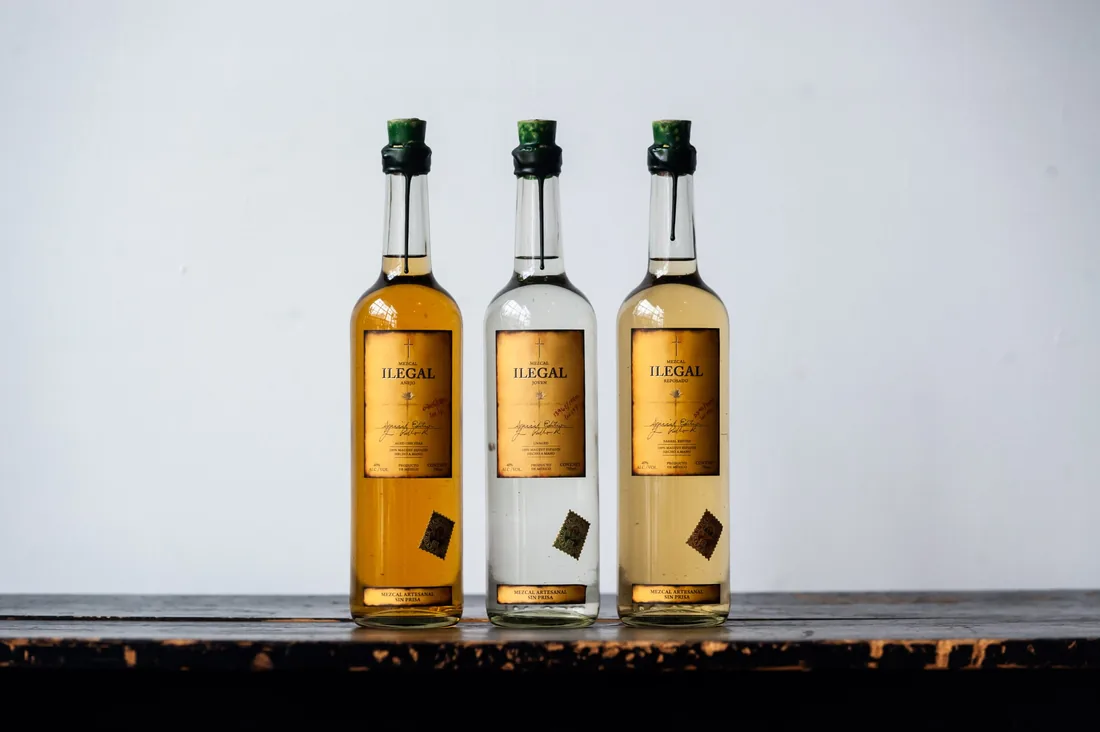
All tequila is technically mezcal. Not all mezcal is tequila. Both are Mexican spirits distilled from the agave plant, and the difference comes down to the agave itself, where it is made, and the smoke.
At Aitch, our agave lounge on King West, we pour a lot of both. It is the question we get more than any other. Here is the clear version.
Both Start With Agave
Agave is a spiky, succulent-looking plant that grows across Mexico and can take anywhere from six to more than twenty-five years to mature. At its centre is the piña, a dense, pineapple-shaped core packed with sugar. Harvesters called jimadores strip away the leaves, the piñas are cooked to convert those sugars, and the result is fermented and distilled into spirit. Tequila and mezcal are two different traditions of doing exactly that.
What Is Tequila?
Tequila is a legally protected spirit made from blue Weber agave. By law it can only be produced in five Mexican states, chiefly Jalisco, home to the town of Tequila itself. The piñas are usually steamed in ovens, which gives tequila a cleaner, brighter, more vegetal character with notes of citrus and pepper.
Tequila is labelled by how long it is aged. Blanco, or silver, is unaged and bright with pure agave. Reposado is rested in oak from two months to a year and turns smoother, with vanilla and caramel. Añejo is aged one to three years and drinks richer and darker, closer to a whisky. Extra Añejo sits in oak for over three years and moves firmly into sipping territory.
One thing to look for on the label is the phrase one hundred percent agave. That guarantees the bottle is not cut with other sugars. Widely recognized names like Patrón helped bring one hundred percent agave tequila into the mainstream, and from there it is a short step to the small-batch bottles we love to pour.
What Is Mezcal?
Mezcal is the older, broader category. It can be made from dozens of different agave species. Espadín is the most common, but tobalá, tepeztate and madrecuixe each bring their own personality. Most mezcal comes from Oaxaca, though several other states produce it too.
The defining difference is how the agave is cooked. Traditional mezcal piñas are roasted in underground pits lined with hot volcanic rock and wood, then buried for days. That smoke soaks into the agave, which is why mezcal so often tastes smoky, earthy and mineral. Much of it is still made by hand in tiny batches by families called mezcaleros, so no two bottles are ever quite the same.
Mezcal vs Tequila, Side by Side
The quick version: tequila is made only from blue Weber agave, while mezcal draws on dozens of species. Tequila centres on Jalisco, mezcal on Oaxaca. Tequila is steamed in ovens for a clean, peppery, citrus profile, while mezcal is roasted in underground pits for that signature smoke. Tequila is often produced at a larger scale, while mezcal tends to be small-batch and artisanal. And technically, tequila is simply one legally protected type of mezcal.
How Do They Taste?
Tequila leads with the agave itself, grassy and peppery with a little citrus, especially in a blanco. Mezcal usually opens with smoke, then unfolds into earth, tropical fruit, minerality and a long finish. If you love a smoky Scotch, mezcal will feel like home. If you prefer something crisp and clean, a good blanco tequila is the natural place to start.
How to Drink Each
Both are best sipped slowly, neat, at room temperature, with no salt, no lime and no shot glass. In Oaxaca, mezcal is traditionally served with orange slices and sal de gusano, a smoky chili-and-salt seasoning. In cocktails, tequila is the backbone of the margarita and the Paloma, while mezcal makes a stunning smoky margarita, a mezcal Negroni or an Oaxaca Old Fashioned. A simple rule: reach for tequila when you want brightness, and mezcal when you want depth.
Is Mezcal Stronger Than Tequila?
Not necessarily. Both are typically bottled around forty percent alcohol, though many artisanal mezcals are released at a higher, unfiltered proof, and the smoke makes them feel more intense even when they are not. It is about character, not just strength.
Does Mezcal Really Have a Worm?
The worm, actually a moth larva known as a gusano, is largely a twentieth-century marketing invention, not a mark of quality or tradition. Most respected mezcals do not contain one. Judge a bottle by its agave, its maker and its flavour, not by a worm.
Where to Try Mezcal and Tequila in Toronto
The best way to understand the difference is to taste them side by side, poured by someone who can walk you through it. That is exactly what Aitch, our agave lounge on King West, is built for: an artisanal tequila and mezcal program that runs from recognizable pours like Patrón to rare single-village mezcals, elevated Mexican bites, and guest DJs Thursday through Sunday from nine. Come in, tell the bar what you like, and let us pour you a flight.
Aitch shares an address with Silent H, our modern Mexican restaurant at 461 King Street West, so you can make a night of it, with dinner upstairs and then agave below. Happy hour runs every day from five to seven if you would like an easy first sip.
Frequently Asked Questions
Is tequila a type of mezcal?
Yes. Tequila is legally its own protected category, but because it is an agave spirit it falls under the broader mezcal family. The saying goes: all tequila is mezcal, but not all mezcal is tequila.
Why is mezcal smoky?
Because the agave is roasted in underground pits with hot rock and wood before it is distilled. The smoke from that process infuses the agave and carries through into the finished spirit.
Is mezcal stronger than tequila?
Both are usually around forty percent alcohol, but many artisanal mezcals are bottled at a higher proof, and the smoke makes them feel more intense. Strength varies from bottle to bottle.
Does mezcal have a worm in it?
Most quality mezcal does not. The worm is a marketing gimmick, not a sign of authenticity or tradition.
What is the best way to drink mezcal?
Sip it neat at room temperature, ideally with orange slices and sal de gusano. It also shines in a smoky margarita or an Oaxaca Old Fashioned.
Where can I try mezcal and tequila in Toronto?
Aitch, Silent H's agave lounge at 461 King Street West on King West, pours an artisanal tequila and mezcal program and can guide you through a tasting flight.